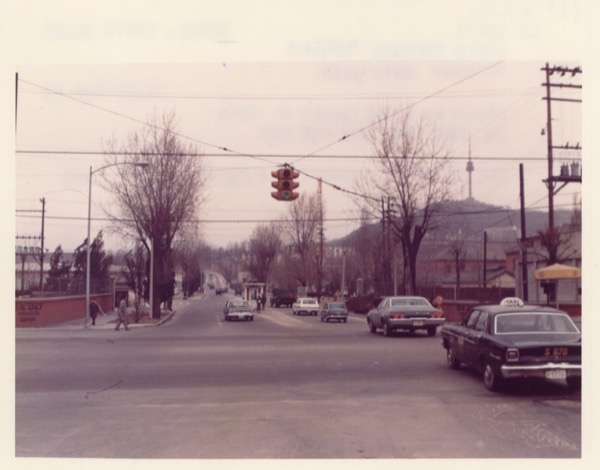
If Yongsan’s record photographs are read only as images of place, one important layer of the corpus disappears. Each photograph shows a location, but it also tells us who recorded that location and under what institutional conditions. For that reason, sources and creators are not secondary metadata. They shift the direction of reading.
Values such as U.S. Army, 8th United States Army, USASTRATCOM, and NARA reveal the administrative frameworks through which records were produced and preserved. Names such as Donald E. Teft, Robert T. Ellis, or Chesson K. Sato return attention to the individual labor and perspective involved in making the image. Yongsan may be one place, but it was never recorded from only one point of view.
This approach strengthens place-based reading rather than replacing it. Aerial photographs, gate images, ceremony scenes, and panoramic views all emerge from different institutional purposes. Once that is visible, the same Yongsan landscape begins to separate into multiple archival logics.
Related pages
/en/sources//en/creators//en/posts/eusa-faces-of-yongsan/